Adjective Flashcards for Kids - Learn Descriptive Words
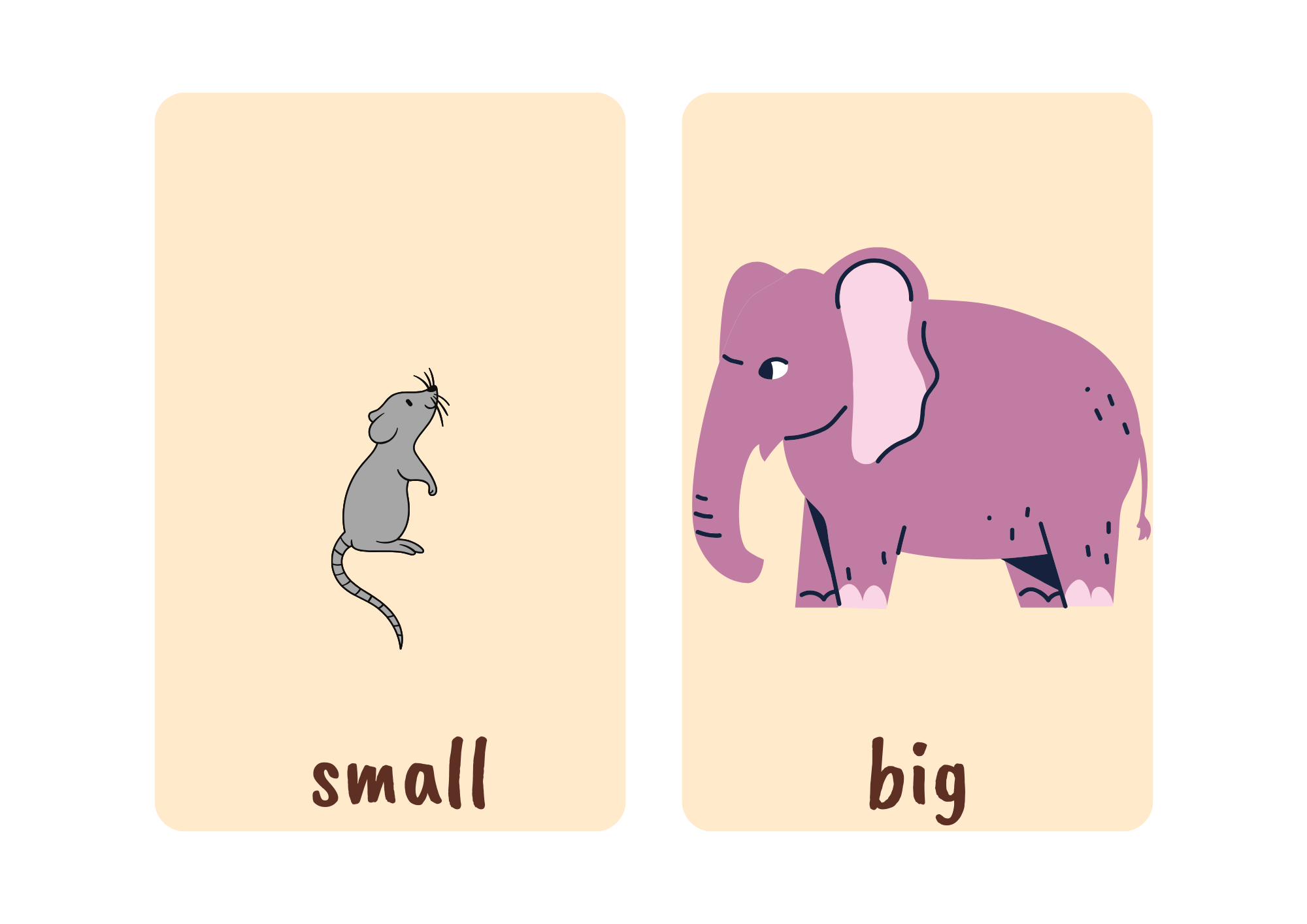
Adjectives are the words that bring color, texture, and richness to language. They describe the qualities, characteristics, and attributes of nouns, helping us paint vivid pictures with our words. Teaching children adjectives early in their language development journey is crucial for building vocabulary, enhancing descriptive abilities, and developing more sophisticated communication skills. Adjective flashcards provide an engaging, visual, and interactive way to introduce young learners to descriptive language. In this comprehensive guide, we'll explore the importance of adjectives in language development and how flashcards can make learning adjectives fun and effective.
The Importance of Adjectives in Language Development
Adjectives are building blocks of expressive language. When children learn adjectives, they develop the ability to describe their experiences, emotions, and observations in greater detail and nuance. This enriches their communication and helps them become more articulate and precise in expressing themselves.
Beyond communication, learning adjectives supports cognitive development. It encourages children to observe details, make comparisons, and think more deeply about the characteristics of objects and concepts. Adjectives also support literacy development, as children who understand descriptive language become better readers and writers. When children encounter rich, descriptive language in books, they're more likely to understand and appreciate the texts they read.
Why Adjective Flashcards Are Effective Teaching Tools
Adjective flashcards combine visual imagery with descriptive words in a way that creates strong learning connections. A picture of something "big" paired with the word "big" helps children understand the concept through multiple sensory pathways. The visual representation makes abstract concepts concrete and memorable.
The repetition inherent in flashcard practice is particularly effective for adjective learning. As children encounter the same adjectives repeatedly in different contexts (big dog, big house, big ball), they internalize the meaning and begin to recognize patterns in how language works. This pattern recognition is fundamental to language acquisition.
Essential Adjectives for Young Learners
Starting with fundamental adjectives provides a strong foundation for descriptive language development. Here are the core adjectives that should be included in comprehensive adjective flashcard sets:
- Big and Small: Size adjectives are among the first children learn and easily apply to objects in their environment.
- Fast and Slow: Speed adjectives help children understand movement and action.
- Hot and Cold: Temperature adjectives connect to sensory experiences children encounter daily.
- Happy and Sad: Emotion adjectives help children develop emotional vocabulary and awareness.
- Soft and Hard: Texture adjectives encourage tactile exploration and description.
- Long and Short: Length adjectives help children understand spatial concepts.
- Tall and Short: Height adjectives are useful for describing people and objects.
- Clean and Dirty: State adjectives describe conditions and qualities.
- New and Old: Age adjectives help children understand time and wear.
- Bright and Dark: Light-related adjectives develop visual descriptive vocabulary.
- Loud and Quiet: Sound-related adjectives enhance auditory vocabulary.
- Beautiful and Ugly: Aesthetic adjectives encourage appreciation and critical thinking.
Engaging Activities with Adjective Flashcards
Adjective flashcards become even more powerful when used in creative, interactive ways. Here are engaging activities that maximize learning:
- Adjective Matching Game: Show a flashcard and ask children to find objects in their environment that match that adjective. This builds real-world connections.
- Opposite Pairs: Introduce opposite adjectives together (big/small, fast/slow) to help children understand contrasts and relationships.
- Descriptive Sentences: Have children create simple sentences using the adjectives. For example, "The big dog is fast."
- Story Building: Use adjective flashcards as prompts for creating stories with descriptive elements.
- Sensory Exploration: Connect adjectives to sensory experiences. Touch something soft, taste something sweet, listen to something loud.
- Comparison Activities: Have children compare objects using adjectives. "Which is bigger? Which is softer?"
- Adjective Hunt: Go on a nature walk or around the house looking for examples of each adjective.
- Drawing and Describing: Have children draw pictures and use adjectives to describe them.
Building Emotional Awareness Through Adjectives
Emotion adjectives are particularly valuable for developing emotional intelligence. When children learn words like "happy," "sad," "angry," "excited," and "scared," they develop a richer emotional vocabulary and become better able to recognize and express their own feelings.
Use emotion adjective flashcards as springboards for discussions about feelings. Ask children when they feel happy, what makes them sad, or what situations make them excited. This not only develops vocabulary but also promotes emotional awareness and expression.
Progressive Complexity in Adjective Learning
Start with simple, concrete adjectives (big, small, red, soft) before moving to more abstract or complex ones (beautiful, gentle, complicated). This progression ensures children build a solid foundation before tackling more nuanced adjectives. As children become more proficient, introduce comparative forms (bigger, softer) and superlatives (biggest, softest).
Practical Tips for Effective Adjective Learning
- Use Consistent Language: Always use the same adjectives consistently to build strong associations.
- Make Real-World Connections: Help children recognize adjectives in their daily lives and in the books they read.
- Incorporate Multiple Senses: Let children touch, smell, hear, and experience adjectives, not just see them.
- Practice Regularly: Short, frequent sessions are more effective than long, infrequent ones.
- Create Meaningful Contexts: Use adjectives in sentences and conversations, not in isolation.
- Celebrate Descriptive Efforts: Praise children when they use adjectives in their own speech and writing.
- Expand Gradually: Don't try to teach too many adjectives at once; quality of learning is more important than quantity.
Conclusion
Adjective flashcards are invaluable tools for developing rich, descriptive language skills in young children. By providing visual, engaging, and interactive ways to learn descriptive words, these flashcards help children become more articulate, expressive, and confident communicators. Whether used in classrooms, homeschools, or at home, adjective flashcards offer a proven and effective approach to language development. Start with basic adjectives and gradually build a comprehensive vocabulary. As your child learns to describe the world with more precision and nuance, you'll notice their communication becoming richer, more detailed, and more engaging. The world becomes infinitely more interesting and expressible when children have the adjectives to describe it!